
Pipe Freezing in Power and Refinery Applications
In power generation and refining, unplanned downtime is enormously expensive and full shutdowns are major undertakings. When a valve, fitting, or section of pipe needs attention, the ability to isolate that line without draining or shutting down the wider system is extraordinarily valuable. Cryogenic pipe freezing provides exactly that capability. By forming a solid ice plug inside the pipe, it isolates a section so that maintenance can proceed while the rest of the facility keeps operating. This article examines how pipe freezing serves power and refinery environments, the benefits it delivers, and the safety rigor these settings demand.
Why Power Plants and Refineries Need Targeted Isolation
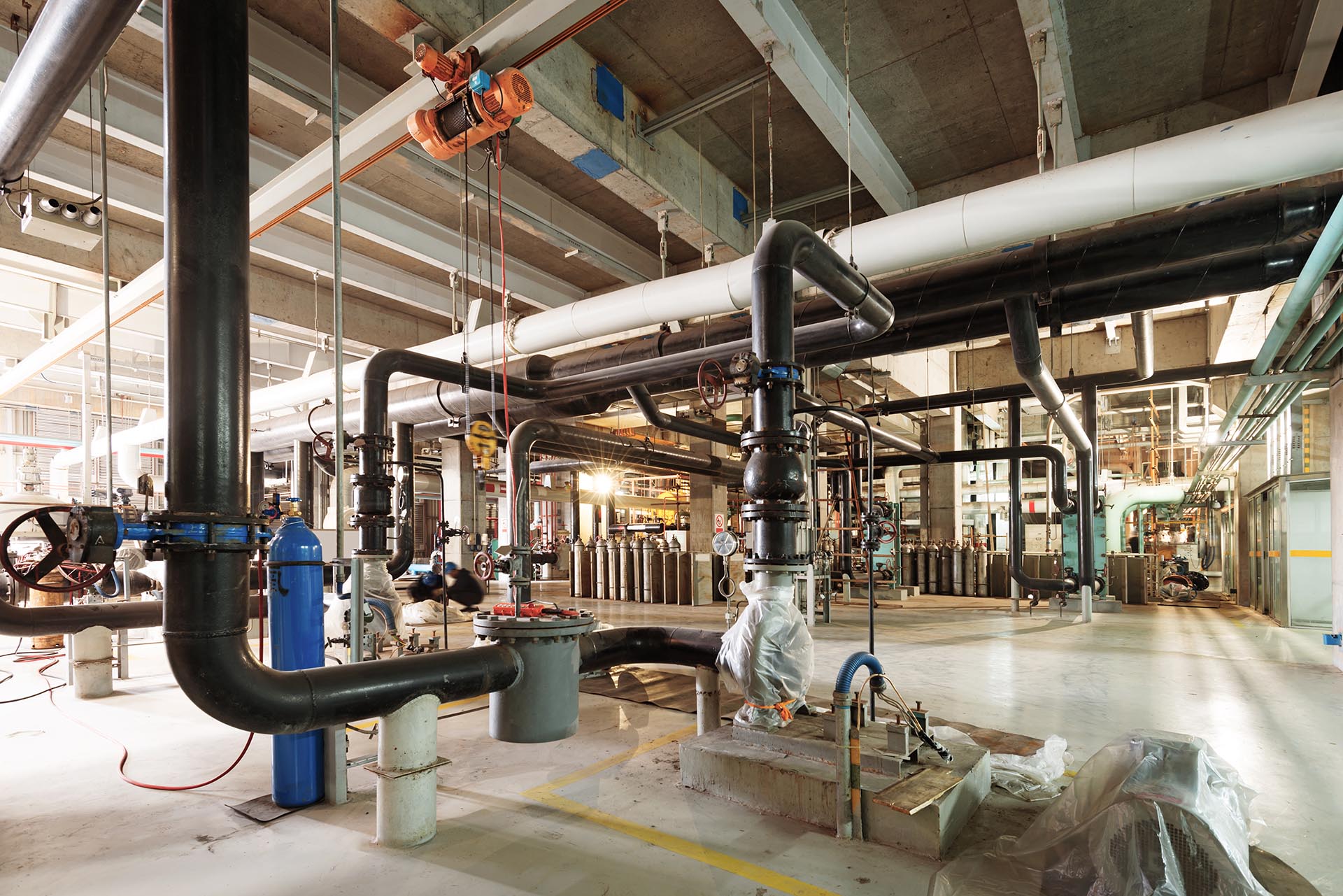
Power and refinery facilities run vast, interconnected piping systems carrying water, steam, cooling media, hydrocarbons, and process fluids. Many of these systems are designed for continuous operation, and taking them fully offline is costly, complex, and sometimes hazardous. A full shutdown can mean lost generation or production worth large sums per hour, plus the considerable time and risk involved in safely stopping and then restarting complex interconnected processes.
At the same time, maintenance is unavoidable. Valves wear out, fittings fail, and modifications are needed. The central challenge is performing that maintenance with the least possible disruption. Conventional isolation depends on existing valves, which are not always present, functional, or conveniently located, and draining large systems is wasteful and slow. Pipe freezing answers this by creating isolation precisely where it is needed, on demand, without relying on the system’s valves. Our overview of industrial pipe freezing and our page on pipe freezing for industrial plants describe these capabilities.
How the Method Works in Demanding Environments
The principle is the same as in any pipe freeze: a cold medium, usually liquid nitrogen, is applied to the outside of the pipe through a freeze jacket, drawing heat from the pipe and the static fluid inside until a solid plug forms. In power and refinery settings, however, the conditions are often more demanding. Pipes may be larger, pressures higher, fluids more varied, and the consequences of error more serious. This raises the importance of expert assessment and execution.
Technicians evaluate the pipe material, diameter, fluid, temperature, and pressure to confirm freezing is appropriate and to plan the freeze carefully. The choice of cooling medium can matter as well, and our comparison of dry ice versus liquid nitrogen pipe freezing explains the differences. A compelling demonstration of freezing under industrial conditions is our case study on isolating a hydrocarbon line without shutdown, which shows the method applied to a demanding line.
Key Benefits for Power and Refinery Operations
Pipe freezing offers several advantages that are especially valuable in these high-stakes environments:
- Avoided full shutdowns. Isolating a single section lets the rest of the plant keep running, protecting generation or production.
- Reduced downtime costs. Minimizing the scope of an outage directly protects revenue.
- Isolation without existing valves. Freezing creates an isolation point even where no valve exists, which is common on long process runs.
- Less fluid loss and recommissioning. Keeping the bulk of the system intact reduces wasted fluid and the time to restart.
- Support during turnarounds. Freezing can enable specific tasks within a planned outage more efficiently, or address issues that arise unexpectedly.
These benefits make pipe freezing a strategic tool for maintenance planning, not merely an emergency measure. For unexpected failures, our guide on emergency pipe isolation covers rapid response, and for valve-specific work, our article on pipe freezing for valve replacement goes deeper.
Common Pipe Freezing Applications in Power and Refineries
Within power and refinery facilities, pipe freezing supports a range of tasks, including:
- Valve replacement and repair on lines without usable isolation valves.
- Cooling water and service water system maintenance.
- Process line modifications where a section must be isolated to add or remove components.
- Fitting and instrument changes that require a temporary isolation point.
- Containment of leaks discovered during operation or inspection.
The versatility of the method, across many pipe sizes, materials, and fluids, is part of what makes it so useful in complex industrial plants. Each application begins with a careful assessment to confirm suitability and plan the work, which our detailed services overview describes.
Safety and Compliance in High-Stakes Settings
Power plants and refineries operate under strict safety regimes, and any maintenance method must meet that standard. Pipe freezing fits well within rigorous safety cultures when performed by trained professionals. Several factors are critical. Liquid nitrogen is extremely cold and an asphyxiation risk in confined spaces, so handling, ventilation, and personal protective equipment must be managed properly. The pipe material must be assessed, since freezing can stress unsuitable materials. Pressure and fluid characteristics must be understood so the plug forms and holds safely. And the freeze must be monitored continuously for the entire duration of the work.
In hydrocarbon and other hazardous-service environments, additional precautions and coordination with facility safety procedures are essential. This is firmly specialist territory, which is why facilities engage experienced pipe freezing providers who understand industrial safety requirements and integrate with site protocols. Avoiding common errors is non-negotiable in these settings, and our article on common pipe freezing mistakes highlights what proper procedure prevents.
Pipe Freezing Within Maintenance Planning
Forward-thinking facilities treat pipe freezing as part of their maintenance strategy rather than only a reaction to failure. Planning isolations in advance, identifying lines that lack convenient valves, and establishing a relationship with a qualified freezing provider all shorten response times and smooth execution. During scheduled turnarounds, freezing can enable targeted tasks without expanding the scope of the outage, and between turnarounds it can address issues that would otherwise force an unplanned shutdown.
This strategic view pays dividends. By knowing that a reliable isolation method is available on demand, maintenance leaders gain flexibility in how and when they address piping work. They can weigh options like freezing against hot tapping or valve shut-off for each situation, choosing the most efficient and least disruptive approach. Our comparison of pipe freezing versus hot tapping helps frame those decisions. The result is less downtime, lower cost, and greater control over the maintenance of complex, high-value systems.
Coordinating a Freeze With Plant Operations
Executing a pipe freeze in a power plant or refinery is as much an exercise in coordination as it is a technical task. Because these facilities run interconnected processes, isolating one line affects others, so the freeze must be planned alongside operations rather than imposed on them. That means agreeing on when and how flow in the target line will be stopped, since the fluid in the freeze zone must be static for a stable plug to form, and confirming that stopping that flow will not create problems elsewhere in the process.
It also means integrating the work with the facility’s permit-to-work systems, lockout and tagout procedures, and confined-space protocols where applicable. Experienced freezing providers are accustomed to operating inside these frameworks and treat them as essential rather than as obstacles. Clear communication about the sequence of the job, including who controls flow, who performs the maintenance once isolation is achieved, and how the freeze is monitored and ultimately thawed, keeps everyone aligned and safe. When this coordination is done well, a freeze becomes a routine, controlled part of plant maintenance, slotting neatly into the facility’s existing safety and operational discipline rather than disrupting it.
Weighing the Cost of Downtime Against the Cost of the Freeze
For decision-makers, the economics of pipe freezing in these industries are usually compelling once the full picture is considered. The visible cost of a freeze is the service itself, but the relevant comparison is against the alternative, which is often a much larger and more expensive event. Draining and recommissioning a major system consumes fluid, labor, and hours, and a full or partial plant shutdown can cost far more in lost generation or production than the maintenance itself. When isolation by freezing keeps the broader facility running, the savings can dwarf the cost of the service.
There are less obvious savings too. Avoiding a drain-down reduces the risk of introducing air or contaminants that can cause downstream problems and additional work. Keeping systems closed protects treated fluids and chemistry that are costly to re-establish. And shortening the overall duration of a maintenance event reduces the window during which the facility operates in a degraded or higher-risk state. Viewed against these factors, pipe freezing frequently emerges as the lower-cost and lower-risk path for isolating a line, which is why it has become a standard option in the maintenance toolkit of many power and refining operations rather than an unusual measure reserved for special cases.
Frequently Asked Questions
Can pipe freezing be used on hydrocarbon lines?
Pipe freezing has been applied to demanding lines, including hydrocarbon service, when properly assessed and executed by experienced specialists following strict safety procedures. Material, pressure, and fluid characteristics are evaluated carefully beforehand, and site safety protocols are followed throughout.
Does pipe freezing avoid a full plant shutdown?
In many cases, yes. By isolating only the section that needs work, freezing allows the rest of the facility to keep operating, which is a major advantage in power and refinery settings where full shutdowns are extremely costly.
What sizes of pipe can be frozen in industrial settings?
Freezing applies across a broad range of pipe sizes, from smaller lines to large mains. Larger pipes take longer to freeze and require more cryogen, all of which a professional assessment accounts for when planning the job.
Is liquid nitrogen or dry ice better for industrial freezing?
It depends on the application. Liquid nitrogen is colder and often preferred for larger or more demanding freezes, while dry ice suits some smaller jobs. Our detailed comparison of the two cooling media explains the tradeoffs and when each is the better choice.
How is safety managed in a refinery environment?
Through trained specialists, proper handling of liquid nitrogen including ventilation in confined spaces, careful material and pressure assessment, continuous monitoring of the freeze, and full coordination with the facility’s safety procedures and permits.
Can pipe freezing support a planned turnaround?
Yes. Freezing can enable specific isolation tasks within a turnaround more efficiently and can address unexpected issues without expanding the outage, making it a useful tool in maintenance planning.
How does pipe freezing fit with permit-to-work and lockout procedures?
Professional freezing integrates directly with a facility’s safety systems. The work is planned within permit-to-work, lockout and tagout, and confined-space protocols, and the freezing team coordinates closely with plant operations on flow control, monitoring, and thawing so the isolation is both safe and compliant.
Can freezing handle high-pressure lines?
Pressure is one of the key variables technicians assess before a freeze. The plug must form and hold against system pressure, so the line is evaluated carefully beforehand, and experienced specialists plan and monitor the freeze to maintain safe, reliable isolation throughout the work.
Isolate With Confidence in Demanding Environments
Power plants and refineries cannot afford unnecessary downtime, and cryogenic pipe freezing gives you a precise, proven way to isolate lines without shutting everything down. Our experienced team understands the safety, compliance, and operational demands of power and refinery environments. Learn more about our industrial pipe freezing services or request a quote to discuss the specific maintenance and isolation needs of your facility’s needs.
